
 Contact Us
 My Account
 Basket


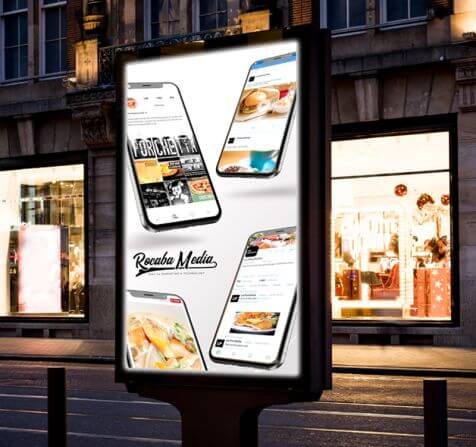
Signage is one of the most powerful tools for businesses to enhance brand recognition and increase sales. It is also an excellent way to communicate with potential customers without talking to them.
While signage comes under the purview of promotional print assets for a brand, designing signage involves several key principles that differentiate it from other assets like brochures. For starters, brochures are typically used in a more personal setting, whereas signage is meant for a public setting. This necessitates graphic designers to create signs with fewer details and legibility in mind.
Here we cover 6 similar essential principles that all graphic designers need to know about signage printing that will help better serve its purpose.
Signage and the Science of Attention to Detail
Signage serves two important purposes for brands in the physical world – conveying a message and enhancing brand recognition. In that sense, signage printing involves paying attention to certain key details that contribute to improving visibility and impact. Every graphic designer needs to follow a few essential principles to develop signs that are not only visually attractive but also perform well.Here’s what you should know.
Minimal with Maximal Impact
Less is more when it comes to banner printing or any type of sign printing. Whether the sign is indoors or outdoors, the purpose is to convey a message quickly and effectively. Hence, it is key to consolidate your message using powerful words. At the same time, it is important to keep the graphic elements and other details to a minimum.
Unlike digital signs where readers can take their time to read and understand the messaging, printed signs read by people most likely on the go, need to communicate the message quickly. So your best bet is to use fewer and cleaner design elements, strategic colours, and clean typography. Maximise the impact of your signs by using strategic placement techniques and colours for different design elements. For example, use red to attract attention, or focus on your brand name to create a high-impact storefront sign.
Environmental Factors
Signage can be placed both indoors and outdoors. It is important to consider the environment when designing it. For example, indoor signs in a retail store serve different purposes than outdoor signs in a high-traffic area. While outdoor signs must attract attention and convey a clear message amid distracting landscapes, indoor signs must be purpose-driven and focused. Furthermore, outdoor signs must endure varying weather conditions, whereas indoor signs are more flexible in material usage. Outdoor signs are also typically larger in size, with minimal text, meant to attract attention, whereas indoor signs are designed to inform while maintaining thematic constraints.
Size, Scale, and Proportion
The size, scale, and proportion of your signs are crucial factors to consider. Every sign must align with the proportions of the space and the function it performs. For example, as opposed to brochure printing which can use smaller fonts, and more intricate details in graphic elements, banner printing inevitably requires larger fonts and fewer distracting details. This is because brochures are meant to be read in a more personal setting where the reader is closer and more focused on the item in their hands.
Banners, on the other hand, are meant for more of a public setting and are typically set against extensive urban landscapes. This means the message must be concise and perfectly legible from a distance, and the design must attract attention. The size of the graphic elements as well as the font and typography must be optimised according to the size and scale of the signage. A general rule of thumb to follow is to make the main text of the sign to be at least 1 inch tall for every 10 feet of viewing distance.
Readability
Any signage, whether indoor or outdoor is placed to convey a message. Hence, readability and legibility are of prime importance. Fonts, typefaces, and colours must be optimised to ensure text is completely legible. The layout of the sign and the quality of the copy decide its readability. The key is to choose a combination of text and graphic elements that complement each other and deliver the message most powerfully. For example, a commonly used font type in banner printing is Sans-Serif, because it has clean edges and is easier to read from a distance. Similarly, contrasting colours of backgrounds are used for outdoor signs to enhance legibility.
Durability and Aesthetics
The materials used in signage play an important role in its perception, durability, and longevity. Outdoor signs are typically developed using aluminium, acrylic, foamex, dibond, etc. as they need a high amount of weather-resistant and durable qualities. Indoor signs leave more room to experiment with aesthetic enhancements, textures, and finishes. The finish is another crucial element to consider during banner printing or any outdoor sign printing because its reflectiveness in various lighting conditions also affects its readability.
Brad Consistency
Lastly, designers must ensure that the signage accurately reflects the brand’s identity. This means the colours and fonts used, the tone and language of the copy, the layout, and the overall visual appeal of the sign must be cohesive and consistent with the brand’s corporate image. At the same time, the print signage must be consistent with signs across digital platforms as well.
This is why at VC Print we provide fully personalised signs for outdoor and indoor usage. We allow brands to incorporate their colour palette and typefaces when designing signage and brochures so that they get to extract maximum value for their money.
Wrapping Up
Developing personalised signs that make an impact is an art that works on principles of human perception. Any type of signage requires careful attention to several factors that differentiate it from digital or print assets. Starting from the layout and aesthetics to the size, scale, and proportion, there are certain specific principles to follow in banner printing to achieve the best results. Use this guide to support your signage projects and have your clients partner with a comprehensive printing company to get access to multiple product and service options.
For all types of print assets and personalised signs, including banner printing, brochure printing, poster printing, and more, contact VC Print.


