
 Contact Us
 My Account
 Basket


The UK printing industry is undergoing a significant transformation, with a clear shift from traditional offset printing to advanced digital solutions. As technology progresses and consumer preferences evolve, digital printing is becoming increasingly favoured for its speed, flexibility, and customisation. With the UK digital printing market projected to grow at a robust pace, businesses are re-evaluating their strategies to stay competitive. This transition reflects broader industry trends towards efficiency, sustainability, and the growing demand for personalised, short-run print solutions.
Evolving Dynamics in the UK Printing Industry
The UK commercial printing market is experiencing notable changes, influenced by technological advancements and shifting consumer demands. While offset printing has historically dominated the commercial printing sector, digital printing is steadily gaining momentum as a competitive alternative.
In 2024, the UK commercial printing industry reached an estimated value of USD 25.68 billion. Forecasts indicate this figure will rise to USD 29.94 billion by 2030, reflecting a compound annual growth rate (CAGR) of 2.8% between 2025 and 2030. Despite the growing adoption of digital solutions, lithography continues to lead as the industry’s largest segment.
However, digital printing is emerging as the fastest-growing segment, reflecting a shift in industry dynamics.
In 2023, the UK digital printing market was valued at USD 2.42 billion and is forecasted to reach USD 3.41 billion by 2030, marking a 5% CAGR over the 2024–2030 period. This growth is indicative of the increasing adoption of digital printing technologies across various applications.
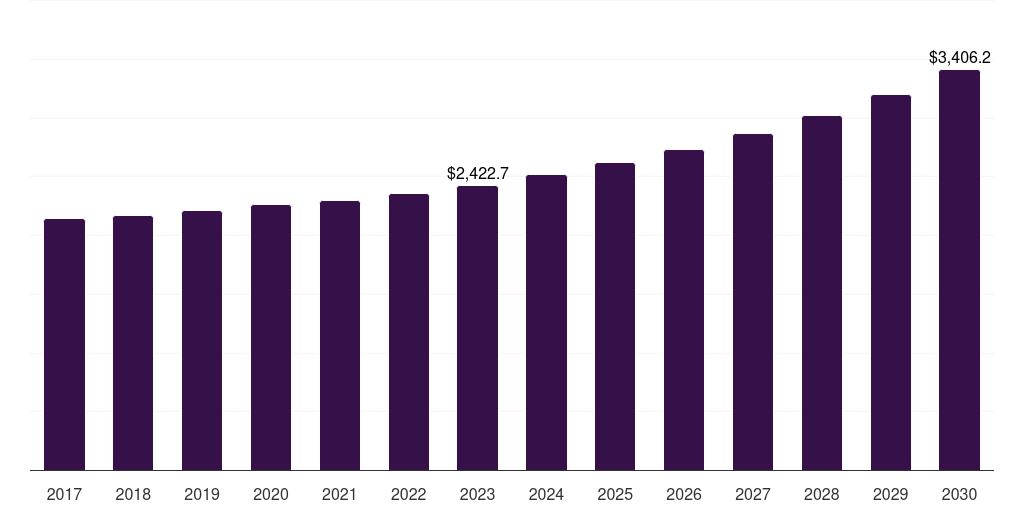
Source: Grand View Research
Drivers of the Shift to Digital Printing
1. Demand for Shorter Print Runs and Customisation
Modern businesses and consumers are increasingly seeking personalised and on-demand printing solutions. Digital printing caters to these needs by allowing for shorter print runs without the need for extensive setup, making it ideal for customised marketing materials, packaging, and promotional items. This is especially true in the packaging printing sector, where businesses can benefit from the flexibility and cost-effectiveness of digital printing for small batches or tailored packaging designs.
2. Faster Turnaround Times
Digital printing streamlines setup and accelerates production, allowing businesses to meet tight deadlines and adapt swiftly to shifting market demands.
3. Technological Advancements
Advancements in inkjet and laser technologies have significantly elevated the precision and productivity of digital printing. These technologies now rival traditional offset printing in terms of quality, making them a viable alternative for many applications.
4. Integration of Automation and AI
The incorporation of automation and artificial intelligence (AI) into printing workflows is streamlining operations. Automated systems can manage repetitive tasks, reduce human error, and optimise resource utilisation. AI algorithms assist in the predictive maintenance of equipment, ensuring minimal downtime and consistent print quality. This integration enables printing firms to streamline operations and adapt rapidly to evolving market demands.
5. Emergence of Sustainable Printing Practices
Environmental considerations are increasingly influencing printing practices in the UK. Technological innovations have led to the development of eco-friendly inks, energy-efficient printers, and sustainable substrates. Adopting these green technologies not only reduces the environmental footprint but also appeals to environmentally conscious consumers, providing a competitive edge to businesses embracing sustainability.
6. Expansion into Diverse Printing Applications
Technological progress has expanded the scope of digital printing beyond traditional applications. Printing businesses are now venturing into areas such as textile printing, 3D printing, and printed electronics. These new applications offer opportunities for diversification and access to emerging markets, enabling companies to broaden their service offerings and revenue streams.
Embracing technological innovations is crucial for UK printing businesses aiming to stay competitive and meet the dynamic needs of their clients. By investing in advanced technologies and sustainable practices, companies can enhance their operational capabilities and position themselves for long-term success in the evolving printing landscape.
Comparative Analysis: Offset vs. Digital Printing
| Aspect | Offset Printing | Digital Printing |
| Setup Time | Longer setup due to plate creation | Minimal setup, ideal for quick jobs |
| Cost Efficiency | More cost-effective for large volumes | More cost-effective for small volumes |
| Customization | Limited customisation options | High customisation capabilities |
| Turnaround Time | Longer due to setup and drying times | Faster production and delivery |
| Print Quality | High-quality, consistent results | Comparable quality with modern technology |
Implications for UK Printing Businesses
The transition towards digital printing presents both challenges and opportunities for UK printing businesses.
Opportunities
- Diversification of Services: Offering digital printing services allows businesses to cater to a broader range of client needs, including personalised and short-run projects such as personalised notepads and stationery accessories. This flexibility enables businesses to create unique, tailored items for their clients, enhancing customer satisfaction and brand identity.
- Increased Efficiency: Digital printing streamlines the production process, reducing turnaround times and enabling quicker delivery to clients.
- Adaptability: Businesses can more easily adapt to market trends and client demands, offering flexible solutions without significant changes to infrastructure.
Challenges
- Investment in Technology: Transitioning to digital printing requires investment in new equipment and training for staff.
- Market Competition: As more businesses adopt digital printing, competition may increase, necessitating differentiation through quality, service, or niche offerings.
Conclusion
The shift from offset to digital printing in the UK is a reflection of changing market dynamics and technological progress. For printing businesses, embracing digital printing offers a pathway to meet contemporary client demands, improve operational efficiency, and remain competitive in a rapidly evolving industry. By understanding the benefits and challenges associated with this transition, businesses can make informed decisions to navigate the future of printing successfully.


