
 Contact Us
 My Account
 Basket


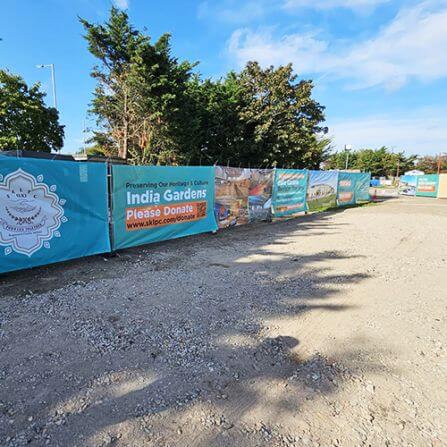
Colour usage in marketing is a much deeper process than it may seem. It goes beyond choosing a few key colours from a universal palette to form a corporate identity template or an attention-grabbing ad.
One of the main decisions to make involves choosing the right colour system.
RAL and Pantone are two of the most widely used and recognised systems for devising colour specifications and communication guidelines for companies across various industries. While both systems define colours at a primary level, they differ in several aspects, including their origin. Based on their definitions, their applications and industry usage also differ.
Here, we delve into more detail about the key differences in RAL vs. Pantone and when to use each.
RAL Colour System – an overview
The RAL Colour Grading System was developed in Germany in 1927; its acronym corresponds to its German name. It is primarily used in Europe for coatings, paints, and other industrial applications; for the same reason it is commonly referred to by brands when developing signage, coatings, construction signs, and the like.
It is known for its simple four-digit colour coding mechanism where each colour is assigned a four-digit number code, based on which brands or businesses can identify, match, and replicate colours for various applications. It offers a range of 2500 colours, which compared to the Pantone system, is a limited palette.
In terms of application, it is used as a standard system for industrial needs like manufacturing and construction where there is a need to match paints and powder coatings at a precise level. Moreover, it is used in fields focusing more on durability and quality, such as outdoor signage or other large-format signage like business signs.
Pantone Colour System – an overview
The Pantone Colour System, one of the most widely accepted colour matching systems in the world, was developed in the 1960s and is mainly used in creative industries like fashion, graphics, design, and print publications. It is well-known for its extensive library of colours and its ultra-precise matching capabilities. This perhaps makes it more preferred by creative marketers requiring careful and prompt attention to detail.
The Pantone system follows a unique coding process where each colour is assigned an alpha-numeric combination that helps designers and marketers identify and match colours. In contrast to RAL, Pantone offers more than 10,000 colours, including specific shades for different applications such as print, textiles, media, and packaging.
RAL vs. Pantone – Key Differences
Here is a comparative study between RAL vs. Pantone.
Library size
One of the primary differences between RAL and Pantone colour-grading systems is the range of colours. While RAL offers a limited range of 2500 colours categorised by colour families such as reds, greens, and blues, Pantone’s library comprises over 10,000 colours, including application-oriented variations for print, digital media, and textiles. It also provides innovative variations such as metallics, special effects, and pastels.
However, RAL’s limited colour library proves sufficient for industrial applications as the emphasis is on creating high-quality, and durable assets like construction signs, dibond signs, etc.
Pantone on the other hand focuses on providing variety so that designers and artists can match colours with precision to create cutting-edge products in print, textiles, etc.
Usage
Another core difference in RAL vs. Pantone is in their usage patterns. As mentioned earlier, RAL is mainly used in Europe, particularly in Germany for industrial uses such as coatings, signage, architectural finishes, and the like. The specifications for colours are often mentioned in the architectural plans for buildings using the RAL Classic system of grading.
Pantone on the other hand, is globally recognised and used in a myriad of creative industries including print, fashion, design, marketing, and advertising. It ensures the precise reproduction of colours across collateral and allows artists and designers to communicate through a universal code when defining colour specifications.
Applications
While RAL is used primarily in industries where projects typically require large-scale production of items, metal coatings, and architectural finishes, Pantone is used in fields where projects demand colour and brand consistency above anything else.
RAL is used to communicate colour specifications by print companies in the development of outdoor signage, such as business signs, Dibond signs, construction signs, banners, and more, as the system provides colour matches more accurately for materials and finishes like aluminium and foamex, that are more commonly used in the signage industry. The focus is more on aspects like weather resistance, durability, and versatility, with a core objective of informing over attraction.
Pantone is widely used by designers to attain precise and cohesive colour matches with fabrics, print material, designs, graphic elements, and the like. This is why the system provides a larger library of colours to enable improved quality of designs. Digital marketing is another area that uses the Pantone system to create cohesive and clean motifs, typography, and other design elements.
RAL Vs. Pantone – When to Choose Each
For brands primarily operating in industrial sectors like manufacturing, construction, signage, etc. RAL would be a more reliable colour system to follow. It provides sufficient variety with a straightforward colour-coding system that allows consistency across a range of materials and finishes like aluminium, plastic, foamex, and others. It is also the best option for large-scale projects with a greater emphasis on durability, like business signs, architectural finishing work, construction signs, etc.
For brands that demand ultra-precise colour matching, on the other hand, like branding, print publications, digital advertising, etc. Pantone would be the go-to option. It provides an extensive range of colours to work with and ensures consistency across several platforms like fabrics, digital media, and paper. Marketing and promotional assets in a print format like brochures, business cards, and catalogues, also best follow the Pantone system to match their digital brand image.
Wrapping Up
RAL vs. Pantone – choosing between two widely recognised colour systems in the world is more a matter of practicality than creative choice. While RAL, developed in Germany offers a limited but accurately applicable range of colours for industrial projects, Pantone with an extensive library of shades offers comprehensive choices for artists and designers to experiment with. Use this guide to learn about the two colour systems and partner with qualified print experts to get your marketing needs done.
For all types of outdoor signage including business signs, Dibond signs, construction signs as well as other print assets, contact VC Print.


